
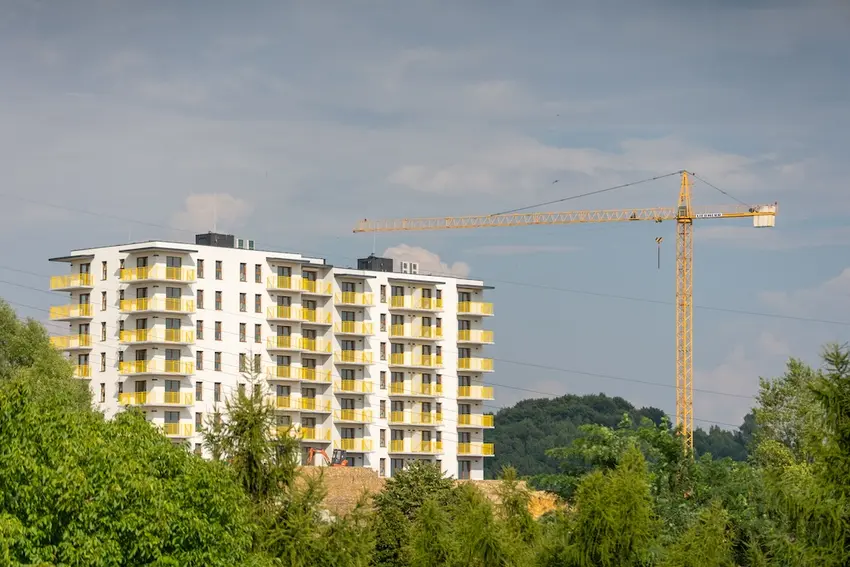
A new study by OBS Business School in Barcelona reveals that Spain’s housing deficit of 740,000 units won’t be corrected for another eight years.
And that will only be achievable at a rate of development of more than 230,000 homes per year.
This target is 128 percent higher than the historical high of new houses built in 2024.
The study shows that since 2021, 1.2 million homes have been under construction in Spain, while only 474,000 of them have been completed.
This represents a deficit of 740,000 homes that extends across almost all provinces, but is worse in Madrid, Barcelona, Valencia, Alicante and Murcia. The only exceptions, according to the report are Guipúzcoa, Cáceres and Soria.
This estimate, however, is less than the 807,000 units the BBVA Real Estate Observatory revealed what they believe the deficit will be by the end of 2026.
Researcher from OBS Business School, Carlos Balado, who created the report, states that "construction is not happening where it is most needed and supply is growing where it is least needed”.
READ ALSO - Greedy landlords or terrible tenants: Who's at fault in Spain's rental crisis?
He explains that this discrepancy increases pressure on the market and forces prices to continue rising, "making housing even more difficult in a never-ending cycle”.
According to the report, some of the main issues are the lack of availability of developable land, difficulties in financing urbanisation projects, a shortage of skilled labourers and the fact that construction costs are constantly rising.
He also explains that requirements regarding sustainability are "very stringent” and that "housing has become highly politicised”.
The report also highlights the excessive bureaucracy that plagues the construction sector.
READ MORE: 'Red tape takes longer than building homes in Spain'
"Spanish urban planning is based on a hyper-regulated model where producing land suitable for building can take up to 20 years,” it explained.
Developable land in Spain represents only 2.1 percent of the territory.
The report also likens the government’s 2026-2030 State Housing Plan, which has a total budget of €7 billion to a "tiny band-aid for a giant wound”.
According to the researchers, greater coordination between the government and the private construction sector is needed to help solve the problem.
READ ALSO - 'Spain is outpricing itself': Your views on the 'impossible' rental market
It warns that certain measures to try and solve the situation such as as public guarantees or tax breaks, could even increase pressure on the market and increase prices further if there is also not an increase in supply.
It states that the average price of housing is 36.5 percent higher than the peak in 2007. Homes in the region of Madrid cost the most, while San Sebastián is the most expensive provincial capital. The city of Zamora in Castilla y León has the most affordable homes out of all the provincial capitals.
READ ALSO: Seven in ten homes empty in Spain's villages in midst of national housing crisis
Comments